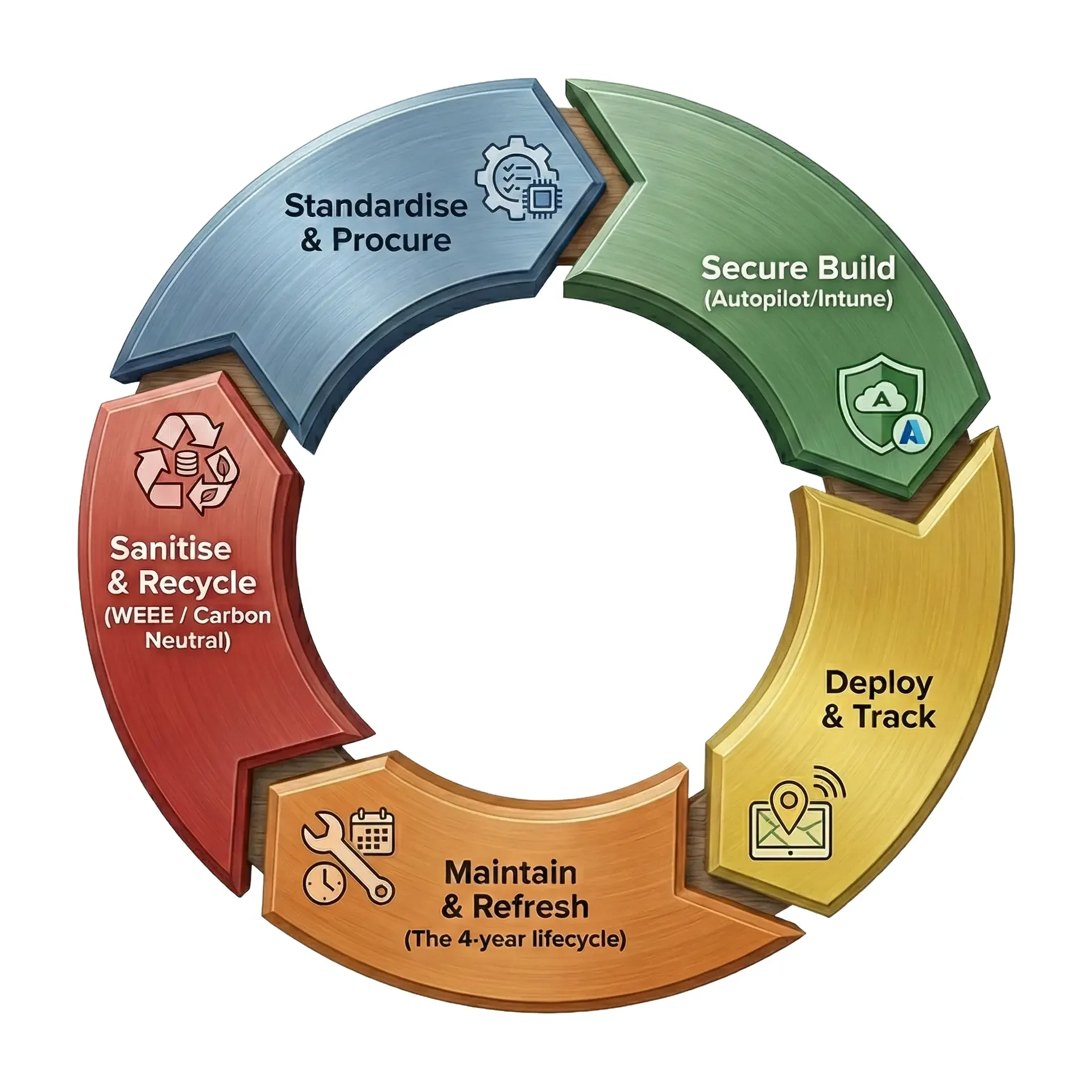
Physical Asset Governance
You cannot secure what you cannot see. This approach to
Hardware Asset Management (HAM) ensures that every physical device is accounted for, compliant, and
optimized for its financial lifecycle.
The Four Pillars:
1. The Foundation
of Security
Hardware is the first line of
defense.
- Inventory Accuracy: Maintain a live reconciliation between purchasing
data and active network data (Entra/Intune) to identify "Ghost Devices" that are missing or
unmanaged.
- The "14-Day" Rule: Ensure that hardware models in the estate are capable
of supporting the latest secure Operating Systems to meet compliance standards.
2. Unified ITAM
(Linking HAM to SAM)
This is where true efficiency
happens. Do not treat hardware in isolation.
- License Harvesting: Ensure that when a laptop is retired the expensive
software licenses sitting on it are immediately harvested and returned to the pool.
- Total Cost of Ownership: Provide a single view of the cost to equip an
employee (Hardware + Software + Support) to help Finance forecast accurately.
3. Sustainability
& Green IT (Carbon Neutrality)
Manage the "Box to Bin" lifecycle
with a focus on environmental impact.
- Secure Disposal: Enforce strict WEEE-compliant disposal processes. This
ensures data is forensically wiped (certified) and physical components are recycled
responsibly.
- Lifecycle Extension: By monitoring device health it helps the business decide
when to refresh kit based on performance data rather than just arbitrary dates.
4. User
Experience (The "Ready" State)
A laptop is a tool for a human
being.
- Standardisation: Advocate for a standardised catalogue of devices. This
reduces driver conflicts and ensures that if a device fails, IT can swap it out immediately
without compatibility issues.
- Zero-Touch Deployment: Utilise tools like Microsoft Autopilot so that a
new device can go from "Box" to "Ready to Work" in minutes not hours.